LOC vs. LCO vs. LGO: The Emulsion Chemistry of Layering Textured Hair
The natural hair community has debated the order of moisturizing products for over a decade. Does oil go before cream or cream before oil? Looking at product chemistry through the lens of interfacial tension and thermodynamic phase stability settles the debate once and for all.
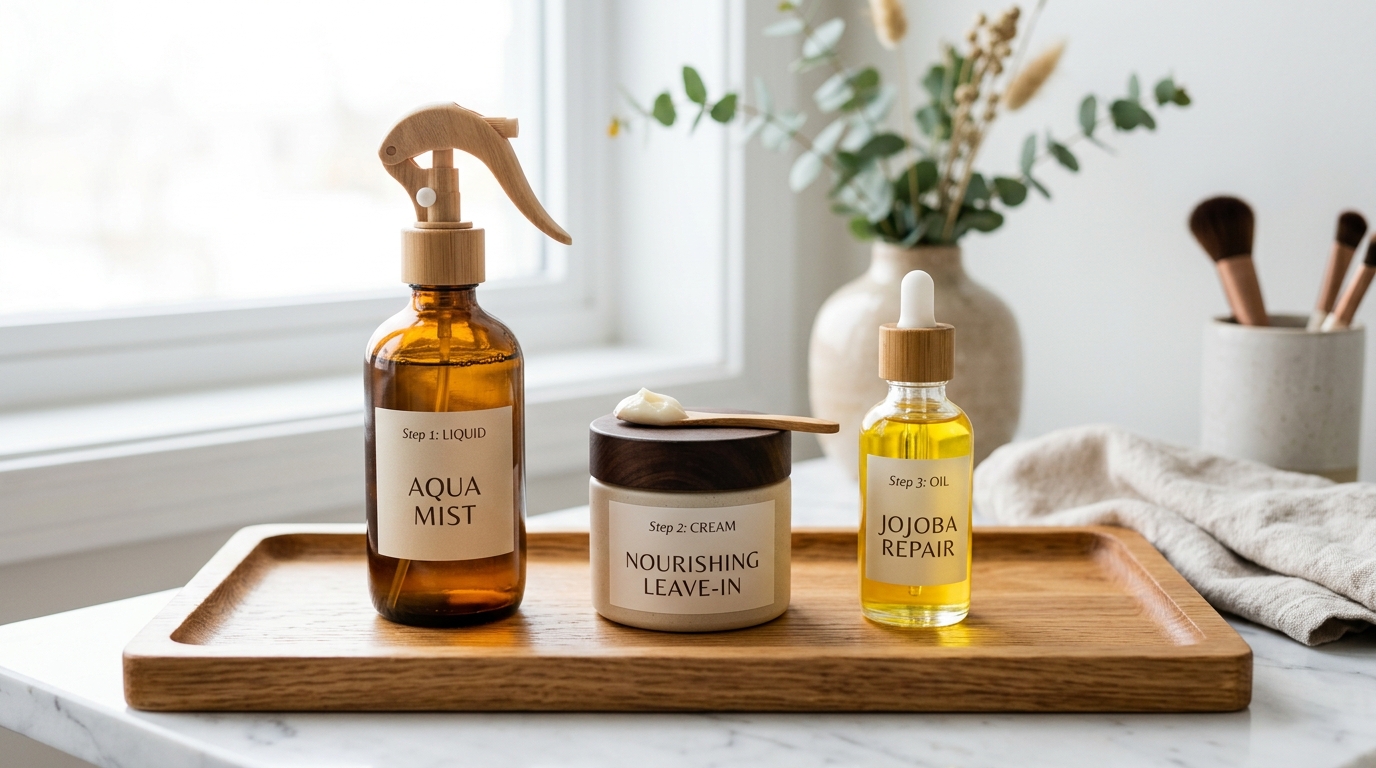
1. The Emulsion Chemistry: Why Oil Before Cream Breaks Physics
The original LOC method (Liquid → Oil → Cream) was coined on the premise that oil seals in water, and cream seals in oil. However, basic cosmetic chemistry demonstrates that oil and water are immiscible phases that exhibit high interfacial surface tension.
Styling creams are water-in-oil (W/O) or oil-in-water (O/W) emulsions consisting of water (60–80%), fatty alcohols, and cationic emulsifiers. When you coat a damp hair strand in pure hydrophobic oil (the "O" step), you create a non-polar hydrocarbon barrier over the cuticle. When you then apply a water-based moisturizing cream (the "C" step), the aqueous portion of the cream cannot penetrate the hydrophobic oil film.
Instead of penetrating the hair cortex, the emulsifiers in the cream attempt to bind to the unabsorbed surface oil. Because the hair is already saturated with oil, the emulsion breaks, causing the fatty alcohols and polymers to precipitate out as gummy, unsightly white residue that hardens into flakes as it dries.
To understand the full architecture of cuticles and hydration, review our pillar guide: The Moisture Retention Handbook for Type 4 Hair.
2. Comparing the Three Core Layering Sequences
Water/leave-in infuses the cortex. The cream immediately follows, delivering fatty alcohols (Cetearyl Alcohol) and humectants directly into the damp cuticle layers. Finally, pure oil (Castor or Shea Butter) is smoothed over the exterior as an impenetrable hydrophobic shield. Zero pilling, maximum softness.
Replaces heavy lipid creams with botanical mucilage gels (Flaxseed, Aloe Vera, or Hydroxyethylcellulose). For low-porosity coils that reject heavy butters, the gel deposits a flexible, breathable carbohydrate polymer film that traps water without grease; review Low Porosity Cuticle Science.
LOC only works if the "O" step uses a low-molecular-weight penetrating oil like pure fractionated coconut oil (C12:0 Lauric Acid) that enters the cortex immediately without leaving a surface hydrocarbon film.
3. The South Florida Factor: Dew Point & Humectant Reversion
Operating out of Pembroke Pines, Florida, our salon stylists encounter the harsh effects of subtropical humidity on textured hair daily. When the outdoor dew point exceeds 65°F (18°C), simple humectants like pure glycerin pull moisture aggressively out of the saturated atmospheric air into the hair cortex.
This causes the hair fiber to swell excessively, breaking hydrogen style bonds and producing instant frizz and curl shrinkage. In high dew-point climates, your final "O" sealing layer must contain occlusive triglycerides (like Raw Shea Butter or Jojoba) or film-forming polyquaterniums to act as a humidity shield.
Frequently Asked Questions: Layering Methods
What is the primary scientific difference between the LOC and LCO methods?
The fundamental difference lies in emulsion physics. In the LOC method (Liquid, Oil, Cream), placing oil directly on water creates a hydrophobic barrier that repels the aqueous phase of the subsequent styling cream, often causing product pilling and white flakes. In the LCO method (Liquid, Cream, Oil), the water-in-oil or oil-in-water cream easily blends with the liquid, penetrating the cuticle before a pure oil is applied as the final seal.
What is the LGO method and who should use it?
The LGO method stands for Liquid, Gel, and Oil. It replaces heavy, fatty alcohol creams with a botanical film-forming humectant gel (such as flaxseed gel, aloe vera, or pectin). It is specifically formulated for low-porosity Type 4 hair and fine coils that become weighed down, greasy, and stiff under thick shea butter creams.
Why does the LOC method cause white residue flakes on natural hair?
White flakes occur due to formulation immiscibility. When a thick cationic conditioning cream containing behentrimonium methosulfate or cetrimonium chloride is layered over an unabsorbed mineral or vegetable oil, the surfactants cannot emulsify on the strand. The polymers precipitate out of solution, drying into rubbery white clumps.